What Is a Brand Messaging Framework? (+ How to Build One That Fuels Quality Content)
If you're still wondering where positioning ends and brand messaging begins, or how to translate your strategy into content that actually connects—you're not alone.
TL;DR
A brand messaging framework is a strategic blueprint that outlines what you say, who you say it to, and why it matters. It connects your positioning with the language you use to communicate your value. Without it, your positioning stays stuck in slide decks and your content feels generic instead of differentiated.
With over 50% of marketers relying on AI for content creation, the risk of blending in is high. While AI can scale output, it can't replace clarity of message.
Founders, marketers, and GTM teams still struggle to build a brand messaging framework that connects strategy to execution—and actually gets used. Without it, your positioning stays stuck in slide decks, and your content feels generic instead of differentiated.
What is a Brand Messaging Framework?
A brand messaging framework is a strategic blueprint that outlines what you say, who you say it to, and why it matters. It connects your positioning—how you want to be perceived in the market—with the language and content you use to communicate your value.
Think of it as your north star. Writing a LinkedIn post? Planning an email campaign? Or briefing your sales team? Your messaging framework keeps everyone aligned and speaking the same language.
What's the Difference: Messaging vs. Positioning vs. Copy?
These terms get thrown around interchangeably, but each serves a different role:
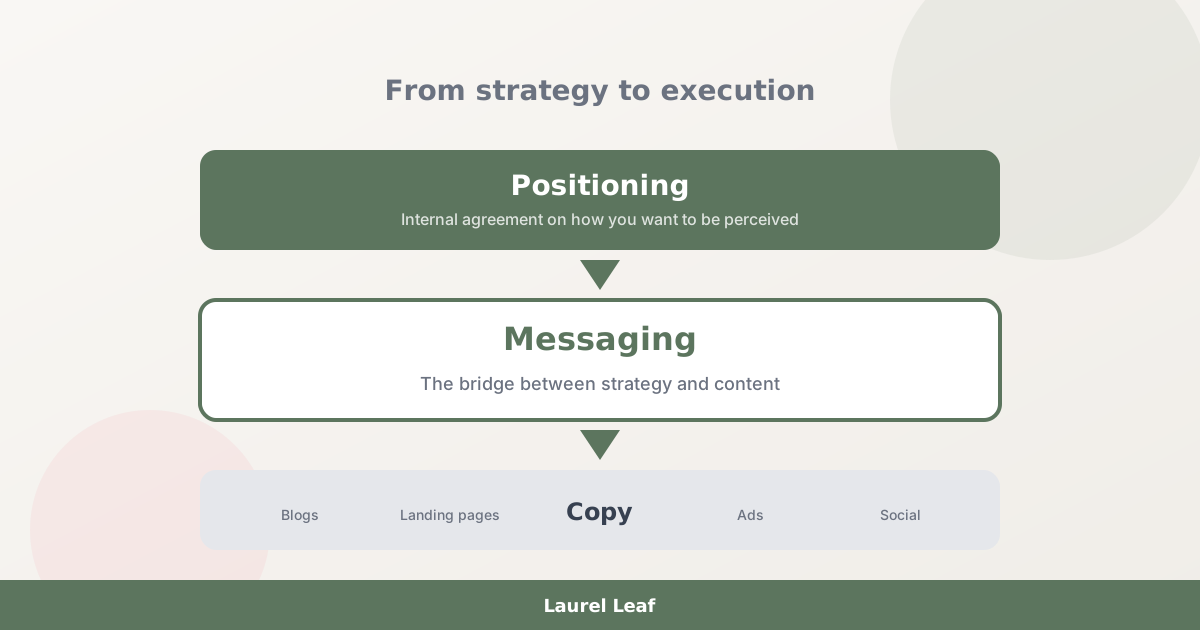
- • Positioning is an internal agreement on how you want to be perceived in the market. It's a strategic bet on what differentiates you, who you serve, and why your product matters.
- • Messaging is how you communicate that positioning to your ideal audience. It's specific to their pain points, goals, objections, and market context.
- • Copy is how that messaging shows up in the world at different touchpoints. Think blog posts, landing pages, social media, ads, and press releases.
Key insight: Messaging is the bridge between your internal strategy and your external content execution. Without it, you risk wasting time and money on content that misses the mark.
How to Develop a Messaging Framework
A messaging framework turns your big-picture positioning into concrete, compelling words. It's not just about helping your audience understand your value—it's about making them feel it.
A strong messaging framework answers questions like:
- → Who are we speaking to? What roles, industries, or segments?
- → What are their core jobs to be done and desired outcomes?
- → What's at stake if they don't solve their problem?
- → How do we solve that problem better or differently?
- → What objections or alternatives are we up against?
Components of a High-Impact Messaging Framework
- 1. Clearly Defined Audience: Go beyond demographics. Get specific about job titles, company size, maturity stage, and segment-specific goals.
- 2. Jobs-to-be-Done: What are they trying to achieve functionally? Don't forget social and emotional jobs—how do they want to be perceived and feel?
- 3. Core Value Propositions: Articulate value in clear, benefit-driven language. Connect features to real customer outcomes with proof.
- 4. Segment-Specific Pain Points: Tailor messaging to problems, desires, and buying triggers of each audience segment.
- 5. Positioning Statements: Strategic statements that frame your category, approach, and unique edge.
- 6. Boilerplate Messaging: Go-to copy assets your team can reuse—a one-liner, elevator pitch, and longer brand story.
Why "Different" Beats "Better" in B2B Messaging
A common trap in B2B marketing is trying to position your product as simply "better"—better UX, better results, better support. But here's the hard truth: your buyers often don't have a reliable frame of reference for what "better" even means.
What resonates more is specific differentiation. Instead of claiming superiority, effective messaging shows how you're different in ways that matter to your audience. Clarity around what makes you meaningfully different always wins over vague claims of being the "#1 platform for XYZ".
Why Every Team Needs a Messaging Framework
Without a messaging framework, everything is an uphill battle. Your content feels disjointed. Your sales conversations are lukewarm. Your website, advertising, and social posts all tell slightly different stories. And prospects? They're confused or worse… uninterested.
But with a solid messaging foundation, you unlock:
- A consistent voice and narrative across every channel
- Faster content creation with minimal friction
- Higher conversions from messaging that actually lands
This isn't a branding exercise. It's a growth engine.
Need a Messaging Framework That Actually Works?
We build custom message maps that distill your positioning into a format your whole GTM team can use. Then we turn that into high-impact content.
Let's talk
Defne Gencler
Founder at Laurel Leaf
Hey my name is Defne and I'm the Founder of Laurel Leaf. I can help you with your positioning, messaging, and content.